
In the grand theatre of patriarchy, women are of nature and the earth. Men are above all that. This clever maneuver allows for a tidy categorization: men as the supposed bastions of culture, reason, spiritual goodness and progress, while women are characterized as the earthy, emotional, and instinctual creatures created to serve the superior male. Men are created by god(s) for philosophy and politics, while women rise from the muck to perform the eternal group project of babies, laundry, cleaning, producing food, cooking food, and of course unquestioned sexual availability to the spiritually and morally superior men. This right here, ladies, is the symbolic, religious and philosophical justification of “Your body, my choice.”
This bullshit is rooted way back, woven throughout the process of creating patriarchy.


The patriarchal, “natural” role of women was baked into Western culture at the time of the writing of the old testament at around 1400 BC, and likely rewritten by various authors for hundreds of years. Genesis 2:21-22 describes the creation of women: “So the Lord God caused a deep sleep to fall upon the man, and while he slept took one of his ribs and closed up its place with flesh; and the rib which the Lord God had taken from the man he made into a woman and brought her to the man” (Genesis 2:21-22, Revised Standard Version). Notice that women are completely passive and powerless in this crucial act of reproduction: we are created by a male god from a male body. Is it not odd that the Judeo-Christian creation myth replaces the observable fact that only the female body makes people?
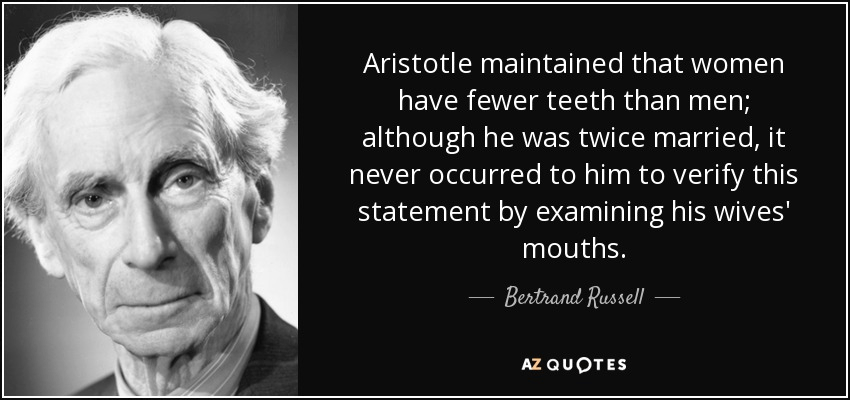

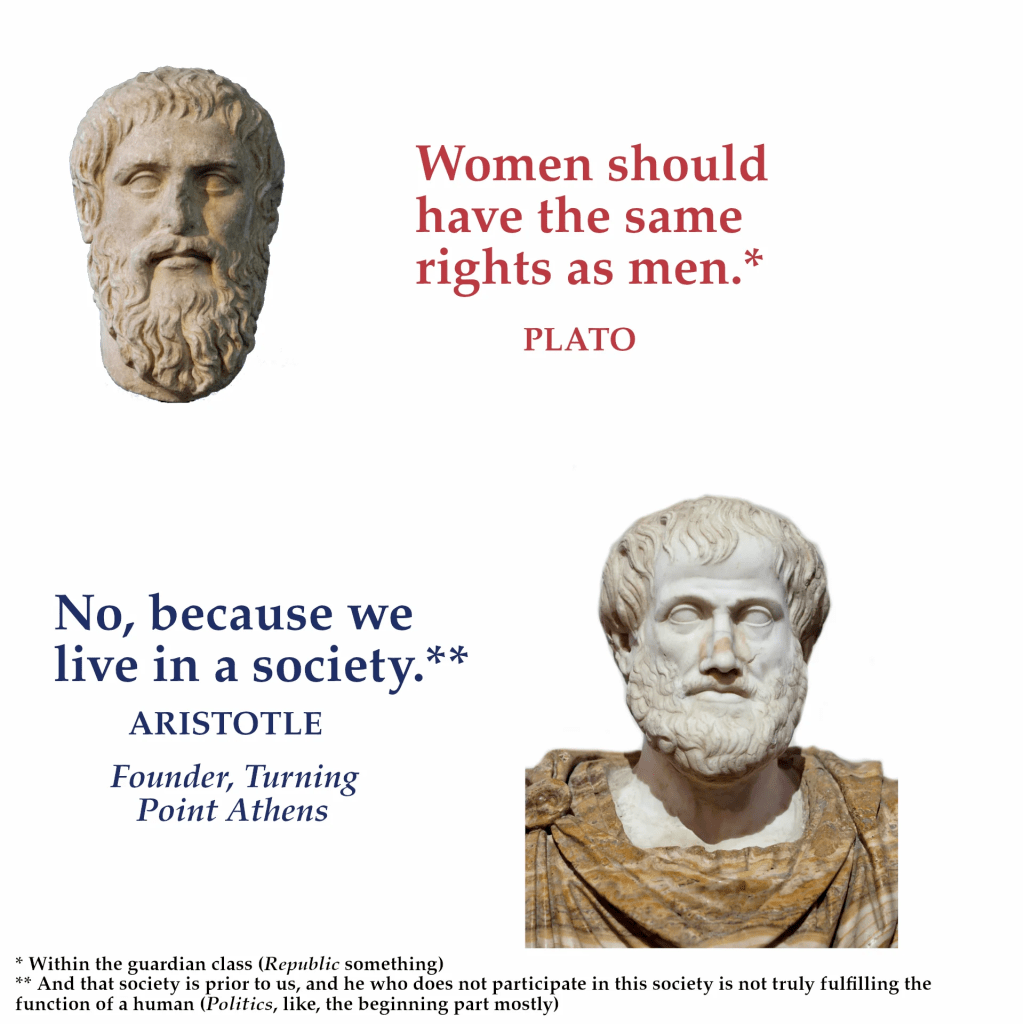
Despite observable evidence to the contrary, Aristotle (384-322 BCE) claimed that women are not much involved in making babies. Completely ignoring who was actually making babies all around him, Aristotle was very interested in inventing a nonsensical, fact-free version of how new people are made, which goes like this: men do everything. We are only the fertile soil into which the divine spiritual force of the man magically impregnates the passive woman who is basically animated mud out of which a man’s divine ding dong makes new people.
Let’s take a moment here to note that the lack of understanding and respect for nature is an important construction in patriarchy: women and nature are passive and were created by a male god not for themselves but only for man’s extraction and exploitation.
Anyway.
You and I are merely the raw material from which a man crafts a new human being, similar to the wood from which he makes furniture. Like the trees grow, the snake slithers and the fox hunts mice, we are driven by our nature to clean, cook, have sex, bear children…all completely without intention or intellect, brainless and utterly animalistic in our processes. According to Gerda Lerner, who wrote a wonderful book titled “The Creation of Patriarchy”, this characterization of women as “natural” while men are elevated above nature, is a fundamental construction of patriarchy, as it provides the rationale for how men treat us (and nature).
This ridiculousness was perpetuated throughout Western history, often accepted as science. The fact that these men had mothers, sisters and daughters, and thought about them in these terms despite living with them and observing them daily is a testament to the power of patriarchy as a mental construct. Imagine what it would be like to have these men in charge of your life, thinking about you in these terms.

Arthur Schopenhauer (1788-1860) claimed that we were given just enough intellectual resources to reproduce and to serve men. Here are a few quotes:
“Nature has equipped women, as it has all its creatures, with the tools and weapons she needs for securing her existence, and at just the time she needs them; in doing which nature has acted with its usual economy.”
“Women are directly adapted to act as the nurses and educators of our early childhood, for the simple reason that they themselves are childish, foolish, and short-sighted.”
“One needs only to see the way she is built to realize that woman is not intended for great mental or for great physical labour. She expiates the guilt of life not through activity but through suffering, through the pains of childbirth, caring for the child and subjection to the man, to whom she should be a patient and cheering companion.”
Finally, “One must say that the fundamental defect of the female character is a lack of a sense of justice. This originates first and foremost in their want of rationality and capacity for reflexion.” This is hilarious in light of the fact that an ordinary working woman named Caroline Marquet accused him of pushing her roughly, likely in a fit of masculine pique, and sued him relentlessly. In the end, after appeals on both sides, Caroline won and the oafish Schopenhauer had to pay three hundred thalers in costs and contribute sixty thalers a year to her maintenance while she lived. Caroline lived for twenty years more. Apparently, this “natural” woman’s “sense of justice” was fully operational.


Jean-Jacques Rousseau (1712-1778) contended that women’s “nature” is oriented towards pleasing and serving men, reflecting the subordinate position he believed nature has assigned to us, and that women are “naturally” dependent on men’s judgment. He made numerous evidence-free claims in a single essay entitled “Emile, or On Education.” The following are my favourites:
“The women’s entire education should be planned in relation to men. To please men, to be useful to them, to win their love and respect, to raise them as children, care for them as adults… these are women’s duties in all ages and these are what they should be taught from childhood.”
“It is in the interest of men to keep women in ignorance; for if they were educated and enlightened, they would no longer remain submissive. Women must be taught to accept their roles without question and understand that their value lies in their ability to serve men. This is not merely a social construct but a reflection of nature itself.”
“Women are made to be conquered, and men are made to conquer.”
“Nature intended women to be the servants of men.”
“The principal role of women is to please men.”
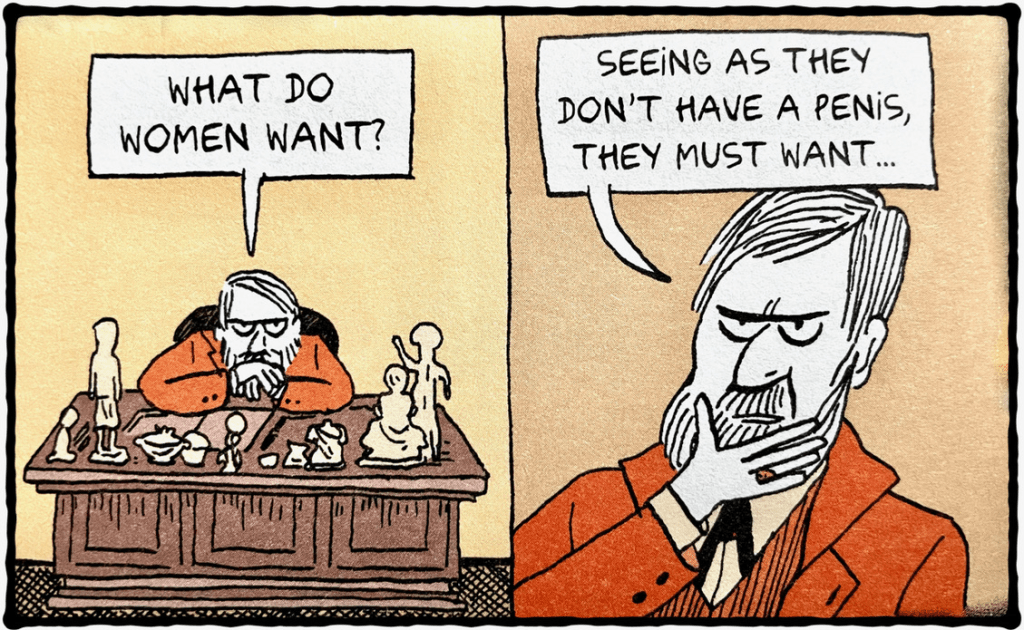
Sigmund Freud (1856-1939)
Most of us know about this guy. Freud believed that women freak out the moment we discover that we don’t have a penis and spend the rest of our lives longing for one. This drives everything we think, feel and do. (Maybe so that we can pee outdoors without dropping our panties? I don’t know.) Here is just a smattering of what he wrote about us:
“What does woman want? This question has not been satisfactorily answered, and it remains a mystery. Women seem to be a dark continent, and their sexuality baffles us. They are often seen as passive beings whose lives are dominated by their sexual reproductive functions, leading to the conclusion that they are inferior to men (Freud, 1933).”
“The female Oedipus complex is less developed than that of males because it is based on a castration complex. A girl’s discovery that she does not possess a penis leads her to experience what I term ‘penis envy.’ This realization disrupts her sexual development, leaving her in a state of longing for what she lacks, which shapes her identity and relationships throughout her life (Freud, 1925).”
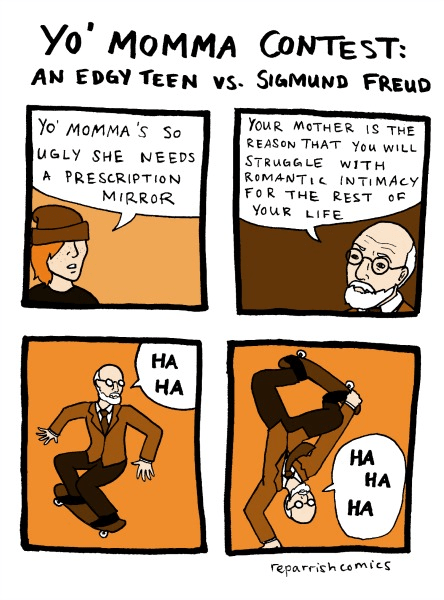
Freud has an urgent warning for lesbians, who may be subjected to self-actualization, orgasms and independent intellectualizing. “The woman who refuses to see her sexual organs as mere wood chips, designed to make the man’s life more comfortable, is in danger of becoming a lesbian–an active, phallic woman, an intellectual virago with a fire of her own …. The lesbian body is a particularly pernicious and depraved version of the female body in general; it is susceptible to auto-eroticism, clitoral pleasure and self-actualization (Freud, 1925).”
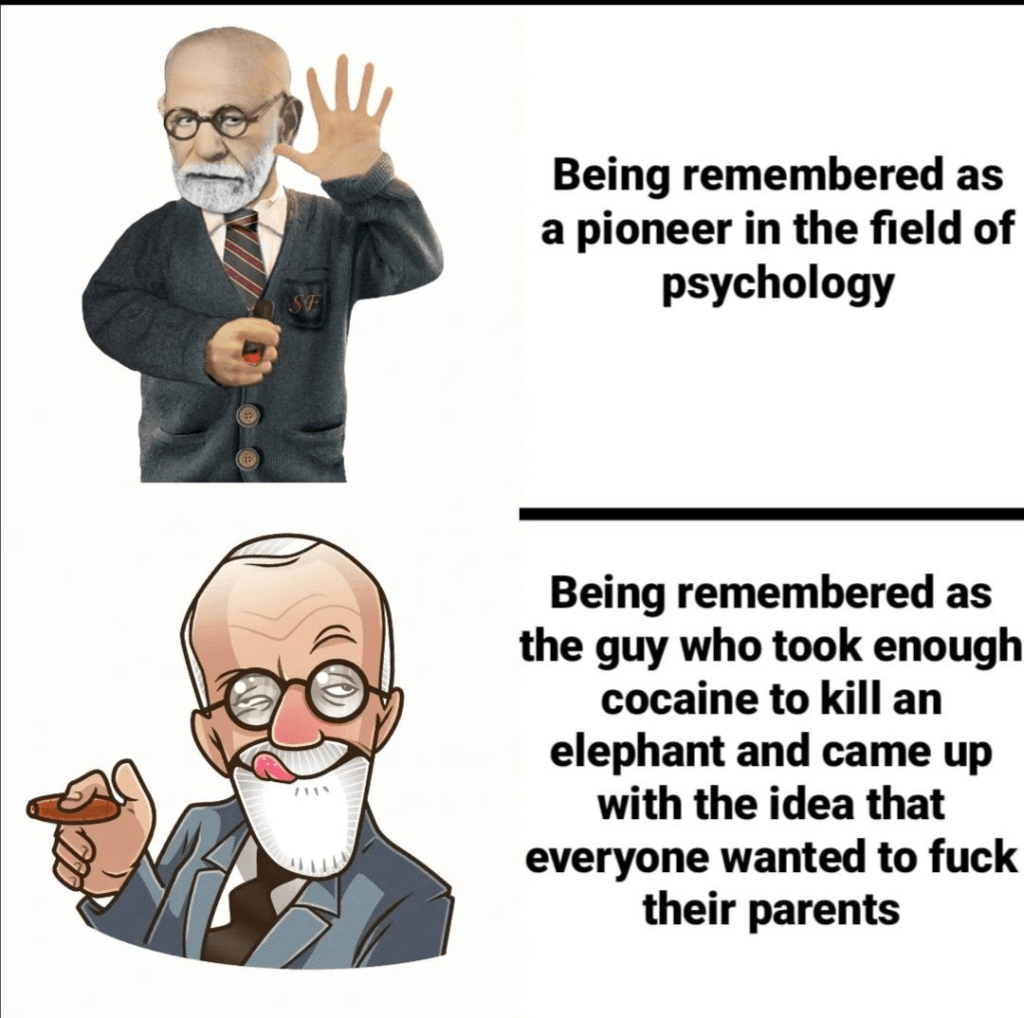
“Women oppose change, receive passively, and add nothing of their own; their role in society is primarily defined by their relationships with men. They are often relegated to the position of mothers and caregivers, which reinforces their subordinate status and limits their potential for personal development (Freud, 1925).”
“In my observations, I have found that women exhibit a tendency toward narcissism more frequently than men do; this trait manifests itself in their physical vanity and their need to value their charms highly as compensation for their original sexual inferiority. This narcissism influences women’s choices in relationships and reflects an underlying sense of envy towards men (Freud, 1964).”
“Women must be regarded as having little sense of justice; this is related to the predominance of envy in their mental life. Their emotional responses are often dictated by feelings of inferiority and jealousy towards men, which complicates their ability to engage in rational thought or moral reasoning (Freud, 1964).”
Spot it, stop it
A lie repeated often enough, and certainly baked into every facet of our culture, reproduces itself. I grew up with it, you grew up with it. It is actively and subconsciously being reproduced in every family, every classroom, every field of play and every workplace, with dramatically negative consequences for women. To stop it, we have to see it and that involves constantly testing our assumptions. Why do we think what we think? Are our assumptions actually based in observable reality?
Here is an example: In 1972, structural anthropologist Sherry Ortner wrote that, in almost “every known society”, women are considered to be closer to nature than to culture. She theorized that every culture devalues nature as it strives to conquer and use nature. Because women are more subject to our bodily functions, and cannot rise above them, we are destined (doomed?) to live closer to nature. Because of our tether to nature, and to raising children, our social roles are considered to be more natural, and less “civilized” or cultural. And obviously, because of all that, our minds are focused on our bodily functions and all this constant engagement with natural processes required to keep our children and entire communities alive, our psychology is “closer to nature (Ortner, 1974)”.
We can see the logic, and a lot of people accept simple logic such as this, but it is simply not true. Gerda Lerner illuminates multiple problems with Ortner’s theory. First among them is that the claim that every known society considers women to be close to nature is an over-bold claim of universality. Ortner wrote that “every known society” views women as closer to nature when what she actually meant was every society she knows about, and which she theorizes about through the lens of the patriarchal nonsense she grew up with and internalized and is witlessly perpetuating.
Lerner also points out that Ortner fails to provide historical examples for what she claims, that she characterizes, also completely without evidence, women as passive victims. Oh, and there are no other genders in Ortner’s conception.
All Ortner’s claims reveal that the lens with which she interprets what she sees is heavily influenced by a patriarchal conception of the world. She lacked the tools to see that, but we don’t. We can remove the patriarchal lens quite easily by simply asking if our assumptions have a basis in observable reality, and not cherry-picking facts just to shore up what we wish is true.
Actually…
Feminist anthropologists have found that male dominance is not universal to all cultures, and many societies have valued all gendered divisions of labour as indispensable and equal in status. Here are some examples:

Even in antiquity, there are examples of women’s bodies being equal, if different, to men’s. Ancient Spartan women received education equivalent to their brothers, played competitive sports, owned and managed property, were allowed out of the house (which was not the case elsewhere in Greece at the time, participated in public affairs and, if they died in childbirth, were recognized in the same way as men who died in battle (Lerner, 1987)(Pomeroy, 2002).
In an online article, anthropologist Ruth Mace provides several current examples including areas in Africa, and any society where the men have to be away a lot or are regularly killed. She wrote that in such societies, the marriage bond is much weaker, women control more property, paternity is somewhat irrelevant, and both men and women can enjoy polygamous relationships (Mace, 2022)
Finally, with increased rights, women in the developed world have clearly demonstrated that our ability to excel intellectually, ethically and physically is at least equal to men. My purpose in providing the following samples is not to devalue men. It is simply to point out that the myth of the natural inferiority of women is simply not true.

Maleness is the most robust predictor of antisocial behavior (Mace, 2013).

In a study published in 2022, a research team discovered that, while men and women are demonstrably equal in measured intelligence, men tend to overestimate how smart they are while women tend to underestimate it. This is the “male hubris, female humility” effect (Reilly, Neumann, & Andrews, 2022).
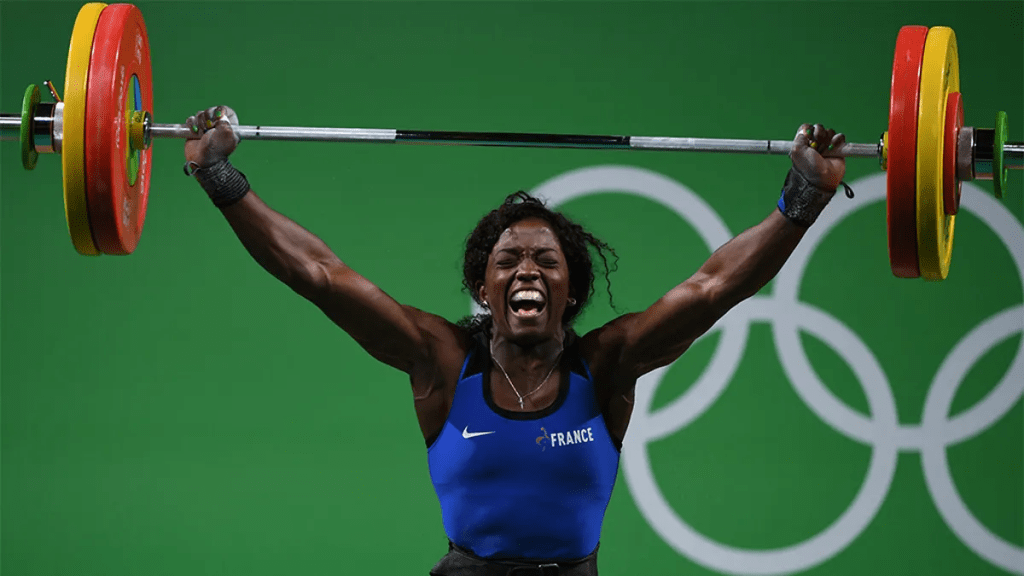
As for physical superiority, look around. You know some women who could squash some men like a bug. Even if we generalize, allowing that most men are faster and more powerful than most women, and most women have better balance and flexibility than most men. We can generalize that men have explosive power but women have more endurance and need less fuel to perform similar tasks. Different but equal. Except…only biological women make people. Kind of a thing.

Want to read more?
In The Creation of Patriarchy, Gerda Lerner describes one of the foundational conceptions of patriarchy: that women are physically inferior, that our choices are not thoughtful or rational but determined by our biology, and that because we are inferior to men (subhuman) in every way, it is correct and proper to treat us as livestock to be exploited. In both religion and science, the subordination of women is “ universal, God-given, or natural (emphasis added), hence immutable (Lerner, 1987, page 16)”. It follows, then, that since God and/or nature created sex differences, which in turn determine the sexual division of labour and power, no one is to blame for sexual inequality and male dominance, and it certainly cannot be changed.
In this argument, the defining physical fact of women is our reproductive capacity and the defining physical fact of men is their superior strength. Women “naturally” give birth while men “naturally” hunt, protect and provide for women and children. Lerner wrote that,
This theory, in various forms, is currently by far the most popular version of the traditionalist argument and has had a powerful explanatory and reinforcing effect on contemporary ideas of male supremacy. This is probably due to its “scientific” trappings based on selected ethnographic evidence and on the fact that it seems to account for male dominance in such a way as to relieve contemporary men of all responsibility for it. The profound way in which this explanation has affected even feminist theoreticians is evident in its partial acceptance by Simone de Beauvoir, who takes as a given that man’s “transcendence” derives from hunting and warfare and the use of the tools necessary for these pursuits (Lerner, 1987, page 17).
Lerner wrote that, when religious explanations for male supremacy lost power in the nineteenth century, so-called science took over.
Much as the Social Gospel used the Darwinian idea of the survival of the fittest to justify the unequal distribution of wealth and privilege in American society, scientific defenders of patriarchy justified the definition of women through their maternal role and their exclusion from economic and educational opportunities as serving the best interests of species survival. It was because of their biological constitution and their maternal function that women were considered unsuited for higher education and for many vocational pursuits (Lerner, 1987, page 18).
More reading:
Bergman G. The history of the human female inferiority ideas in evolutionary biology. Riv Biol. 2002 Sep-Dec;95(3):379-412. PMID: 12680306.
Eme, R. (2013). MAOA and male antisocial behavior: A review. Aggression and Violent Behavior. https://doi-org.login.ezproxy.library.ualberta.ca/10.1016/j.avb.2013.02.001
Freud, S. (1925). The psychical consequences of the anatomical distinction between the sexes. In The standard edition of the complete psychological works of Sigmund Freud (Vol. 19, pp. 241-258). Hogarth Press.
Freud, S. (1933/1965). New introductory lectures on psycho-analysis (J. Strachey, Trans.). W.W. Norton & Company.
Freud, S. (1964). On femininity. In The standard edition of the complete psychological works of Sigmund Freud (Vol. 22, pp. 113-134). Hogarth Press.
Holy Bible, Revised Standard Version. (1952). Genesis 2:21-22.
Horowitz, M.C., “Aristotle and Woman,” Journal o f the History of Biology, vol. 9, no. 2 (Fall 1976).
Lectures Bureau. (2024). The woman who greatly irritated Schopenhauer (Arthur Schopenhauer). https://www.lecturesbureau.gr/1/the-woman-who-greatly-irritated-schopenhauer-arthur-schopenhauer/?lang=en
Lerner, G. (1987). The creation of patriarchy. Oxford University Press. [Kindle Edition]
Mace, R. (2022, September 20). Analysis: How did the patriarchy start – and will evolution get rid of it? University College London (UCL) News. https://www.ucl.ac.uk/news/2022/sep/analysis-how-did-patriarchy-start-and-will-evolution-get-rid-it
Pomeroy, S. B. (2002). Spartan Women. Oxford University Press.
Reilly, D, Neumann, D & Andrews, G. (2022). Gender Differences in Self-Estimated Intelligence: Exploring the Male Hubris, Female Humility Problem. Frontiers in Psychology, 13. https://doi-org.login.ezproxy.library.ualberta.ca/10.3389/fpsyg.2022.812483
Rousseau, Jean-Jacques. “Emile, or On Education.” Translated by Allan Bloom, Basic Books, 1979, p. 366.
Schopenhauer, A. (1851). On women. In Parerga and paralipomena: Short philosophical essays (Vol. 2). Oxford University Press
 Unlearning Patriarchy